
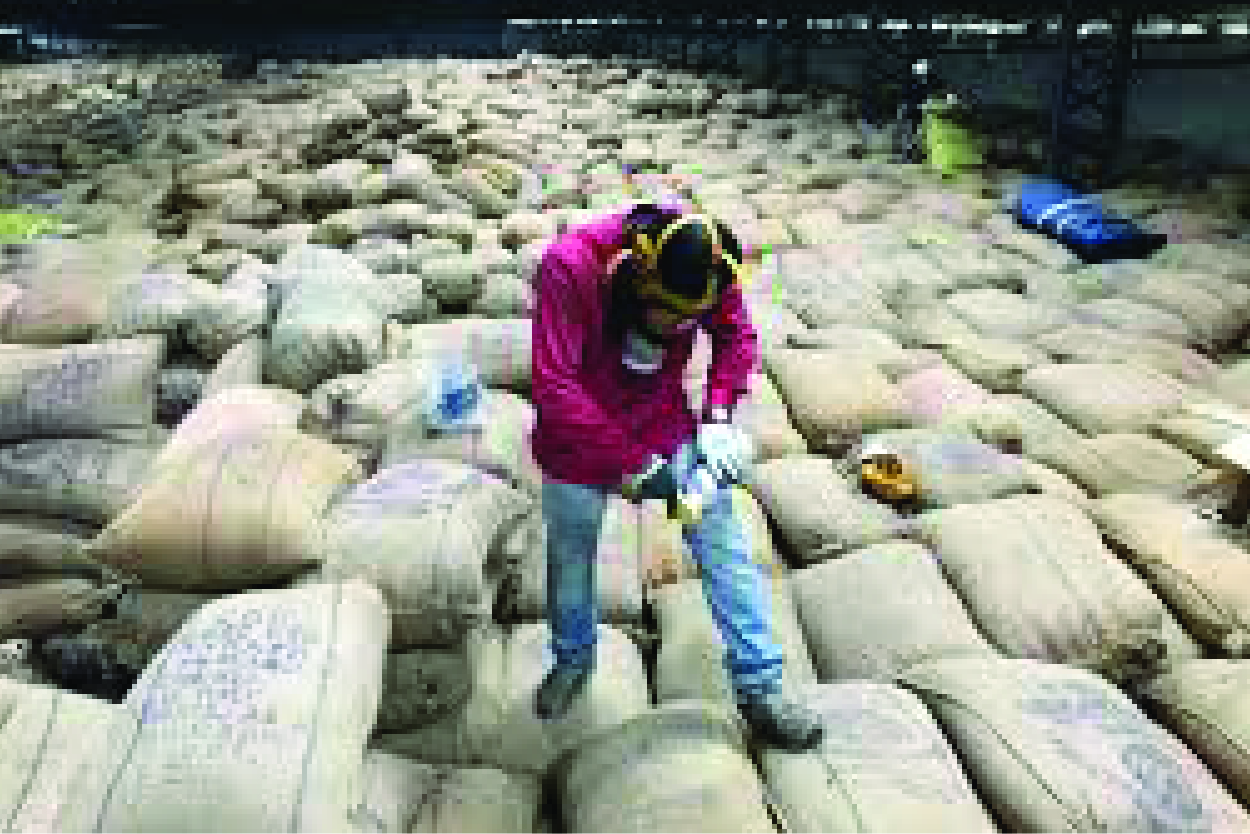
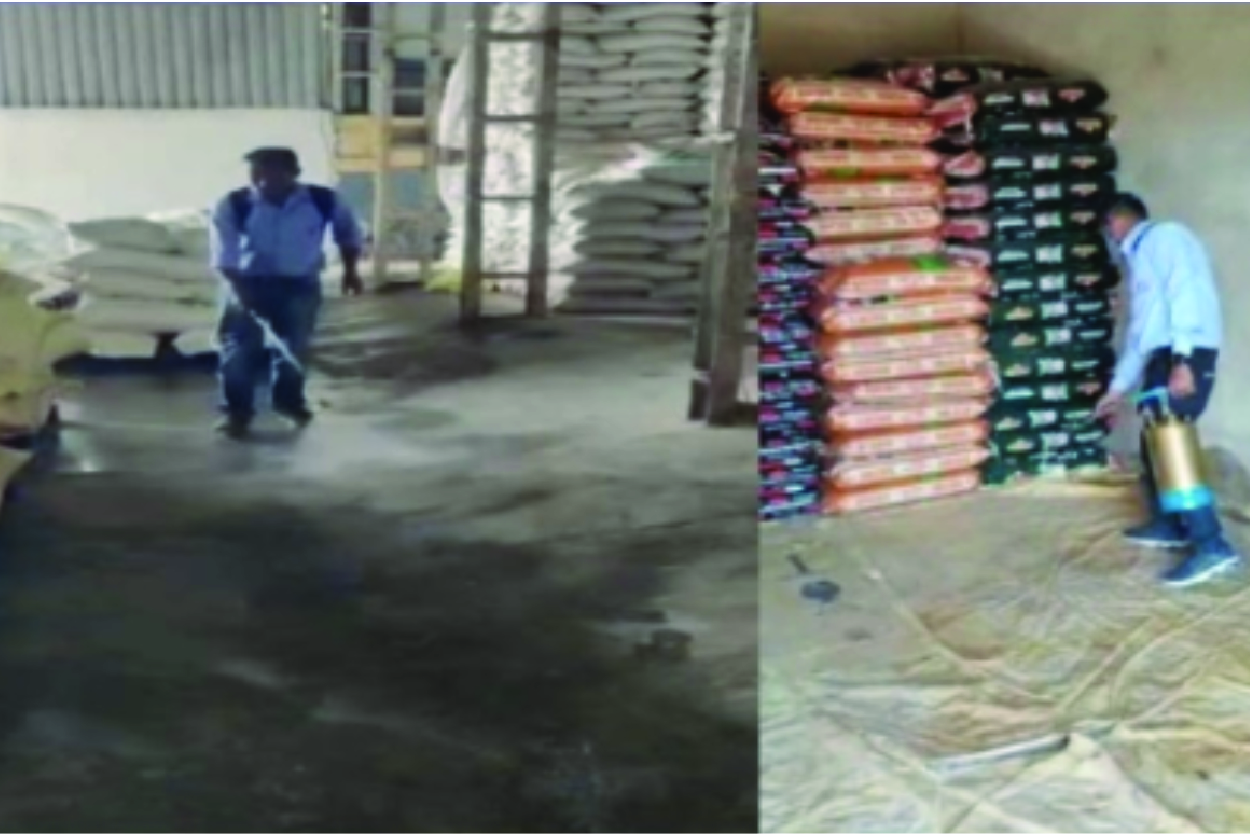
The primary use for ALP is as a fumigant to control insects and rodents in both food and nonfood crops in indoor environments. It is also used in the control of rodents outdoors via application to their burrows or in grain storage areas. Under cover as per ISPM 22 Standard. ALP Stack Fumigation is a method of treating stored grain stacks (bags of wheat, rice, pulses, etc.) using Aluminium Phosphide (ALP) tablets. These tablets release a gas called phosphine, which kills all stages of storage pests (eggs, larvae, pupae, adults)
ALP Stack Fumigation is a widely adopted method for protecting stored grain stacks—such as bags of wheat, rice, pulses, and other commodities—by using Aluminium Phosphide tablets. Upon exposure to atmospheric moisture, these tablets release phosphine gas, a highly effective fumigant that penetrates the stack and eliminates all life stages of storage pests, including eggs, larvae, pupae, and adults. This method provides comprehensive pest control without leaving harmful residues on the treated commodities when applied correctly.
ALP Stack Fumigation FAQ
ALP is used as a fumigant to control insects and rodents in stored agricultural products, grain storage facilities, and rodent burrows.
ALP tablets release phosphine gas when exposed to moisture, which penetrates the grain stack and kills pests at all developmental stages.
Commonly treated commodities include wheat, rice, pulses, maize, and other stored grains and food products.
When used as recommended, ALP breaks down completely and does not leave harmful residues on the commodity.
ALP fumigation is safe and effective when conducted by trained personnel following approved safety guidelines and regulations.